UPF 50+ Explained: Understanding Sun Protection in Umbrella Fabrics
UPF 50+ explained in plain terms?
It’s more than a label; it is a promise of sun protection built right into the fabric of your beach umbrella. While SPF lotions get all the attention, those materials shading your skin can quietly block up to 98% of harmful UV rays.
But how does it really work? And why does UPF matter more than you think when you’re lounging under a canopy?
From woven defenses to high-tech coatings, the science behind UPF 50+ is surprisingly smart and worth understanding if you care about long, sun-soaked days without the burn. Let’s break it down and see what makes an umbrella fabric sun-safe.
What Does UPF 50+ Really Mean?
You might think shade is shade, but when it comes to sun protection, the UPF 50+ tag stitched onto your beach umbrella makes all the difference.
UPF, or Ultraviolet Protection Factor, measures how much UV radiation a fabric blocks. A UPF 50+ rating means only 2% of UVA and UVB rays can penetrate the material; that’s over 98% of harmful rays stopped before they ever touch your skin.
And unlike SPF, which only gauges protection against UVB rays (the ones that burn), UPF covers the full UV spectrum, including UVA, which contributes to long-term skin damage and aging.
This rating isn’t guesswork; it’s earned through rigorous lab testing. UPF ratings are measured by testing how much cumulative UV exposure, both UVA and UVB, actually sneaks through the material. And a UPF 50+ label signals the strictest standard.
Tightly woven, densely constructed fabrics pass with flying colors, while looser, untreated materials often don’t make the cut.
In short? UPF 50+ is a tested and trusted barrier that lets you stay in the sun without worrying about what it’s doing to your skin.
When you choose a well-made beach umbrella, you’re getting fabric that actively shields your skin.
Ready to upgrade your beach essentials? Explore ITA Leisure’s collection here.
UPF 50+ vs. Lower Ratings: Why UPF 50+ Makes All the Difference
Not all shade is created equal. So, when it comes to sun safety, numbers matter.
If you’re wondering if UPF 50+ is worth it over lower-rated options, just consider this: UPF 50+ fabrics will block more than 98% of ultraviolet rays, compared to 93–97% for lower-rated options. The gap may seem small at a glance, but over the course of a sunny afternoon, it can mean the difference between protection and long-term skin damage.
If you're spending hours under the sun, whether on the coast, in the garden, or poolside, UPF 50+ is not a luxury. It's the gold standard for reliable, long-lasting coverage.
When you pair UPF-rated shade with protective clothing, you’ll get a full-circle defense against both direct and reflected UV exposure, allowing you to enjoy every sun-drenched moment with fewer worries.
What Do Those Numbers Actually Mean?
Even with an umbrella overhead, UV rays don’t call a complete truce. They’re still sneaking through fabric, bouncing off sand or water, and adding up over time.
That’s where UPF (Ultraviolet Protection Factor) ratings come in. Here's how they translate into real-world protection:
UPF 15: Blocks about 93% of UV rays, but lets in over 6 times more than UPF 50+.
UPF 25–35: Offers 96–97% protection. Fine for a short café lunch, not great for a full beach day.
UPF 50+: Blocks a remarkable 98% or more, making it the most effective barrier against both UVA and UVB rays. It reduces cumulative photodamage and lowers your skin cancer risk.
Labels matter, by the way. The industry classifies these ratings like so:
Good: UPF 15–24
Very Good: UPF 25–39
Excellent: UPF 40–50+
And here's the catch:
Wet and stretched fabrics let in more UV, so starting strong with UPF 50+ gives you better coverage, even as real-world conditions chip away at performance.
Built for Long Days in the Sun
Sunny hours have a way of stretching when you’re lost in good company or lulled by the gentle percussion of waves. But longer exposure means higher stakes.
The key advantage of UPF 50+ fabrics is that they serve as a primary line of defense against harmful UV rays, offering more reliable and consistent sun protection than sunscreen alone. They let through just 2% of UV rays, reducing cumulative exposure and lowering the risk of sunburn, photoaging, and skin cancer.
By comparison, UPF 30 fabrics allow 3.3% through, a 65% increase in UV exposure over UPF 50+. That extra 1.3% seems small, but during a full beach day, it all adds up, making sunburn more likely with lower ratings.
That’s why our beach umbrellas, made with tightly woven, mineral-infused fabrics, are designed to perform all day, every day.
Our umbrellas don’t just meet the standard, they’re built to hold it, with traditional resist-dyeing techniques, durable polyester construction, and vivid colors inspired by West African heritage.
What Happens After Dozens of Washes?
Here’s the thing:
Not all UV protection stays put. Some fabrics can lose their power pretty quickly, especially after exposure to water, detergent, and the sun.
But high-quality UPF 50+ fabrics are made to last. They often include embedded minerals or UV-blocking agents baked into the fibers, so protection won’t wash away with the tides—something lower protection ratings can’t quite match.
Here’s what that means for you:
UPF 50+ holds ~98% protection even after 40+ washes
Lower UPF fabrics often drop significantly after just 10
Mineral treatments resist salt, chlorine, and sun
Polyester and tightly woven synthetics outperform cotton over time
Whether you are lounging seaside, chasing toddlers, or enjoying those backyard BBQs, durable UPF 50+ shade keeps showing up.
Key Benefits: Why UPF 50+ Umbrellas Matter for Your Skin & Health
While the sun’s warmth might coax you outside, its rays are less forgiving than they appear.
Choosing a UPF 50+ umbrella could reduce your risk of sunburn by up to 95%, compared to going without any shade at all. It’s not about comfort and dodging day-after redness; it’s a proactive way to protect your skin from long-term damage.
These umbrellas block both direct and scattered UVA and UVB rays, offering a reliable barrier that even high-SPF sunscreen can’t match alone. Clinical studies show they can help cut the risk of skin cancer and pre-cancerous lesions by nearly 50% when used consistently.
Black umbrellas, in particular, have been shown to consistently block at least 90% of UV radiation, making them an especially powerful choice.
You’ll notice a real difference beneath one—like cooler temperatures (up to 10°F lower), less flushing, and reduced risk of premature aging, namely wrinkles and sun spots. ITA Leisure’s umbrellas are made with Adire-inspired textiles, blending meaningful design with maximum sun safety.
That said, no umbrella can replace sunscreen entirely. So, use both together for a smart, layered defense, and you’ll stay longer, safer, and more relaxed outside, without worrying about tomorrow’s regrets.
Looking for shade that works as beautifully as it looks? Check out our beach umbrellas—where protection meets design.
Material and Construction: What Makes a Fabric Sun-Safe?

When it comes to sun safety, your umbrella’s defense system starts with something you can’t always see: the fabric’s construction. From fiber density and weave to UV-blocking treatments and color choices, every detail plays a role in how much protection you actually get.
ITA Leisure’s umbrellas are built with more than style in mind. Inspired by coastal color palettes and Adire textile traditions, our canopies blend meaningful aesthetics with performance-tested materials that will hold their ground under the sun.
Let’s break down what sets these fabrics apart and why they’re your best bet for reliable and long-lasting shade.
The Power of Fiber Density and Weave

Those dreamy beach afternoons? They’re better when you’re shaded under a canopy that actually works.
If you’ve ever wondered why some umbrellas offer better sun protection, look closely at fiber density and weave patterns. These details make all the difference.
Cotton canvas feels weighty and textured, while high-grade acrylics can be tightly woven for additional style and strength. It’s more than the fiber composition:
How those strands intertwine determines how much sunlight gets blocked.
Fabrics with high fiber density form a tighter barrier, reducing the gaps that let UV rays sneak through. The weave isn’t a design choice; it’s what turns a pretty umbrella into a protective shield.
At ITA, we use tightly woven materials that also reflect Adire motifs, like our Ọsan-inspired orange canopy, symbolizing warmth, vitality, and smart sun defense.
Here’s what tighter weaves bring to the table:
Better UV blockage from reduced gaps
Denser shade that also resists light rain
Beautiful patterns that double as protection
Long-term durability that won’t fray after a few summers
In short, it’s more than fabric; it’s function with soul. And at ITA, we sweat these little details for your peace of mind.
Behind the Scenes: UV-Blocking Treatments

On a bright afternoon, sunlight doesn’t politely ask for permission. It finds every gap, every thread, every shortcut to your skin. That's why umbrella fabrics use a mix of clever UV absorption methods and coating effectiveness to keep you safe.
Under the surface, there’s chemistry at work.
High-UPF fabrics often undergo specialized treatments that supercharge their UV resistance. Techniques like chemical soaking, heat-setting, and layered finishes help bind UV-absorbing agents directly into the fibers, offering defense that lasts.
For example, products treated with U-V-BLOCK maintain protection even after exposure to rain, heat, and multiple summers at the coast.
One of the main reasons these are so effective is that this treatment forms a permanent bond with the fabric, meaning the sun protection won’t wash out.
Thanks to high-tech polyester, many shade products feature built-in water and UV resistance that help maintain their protective qualities and attractive appearance over the years of outdoor use.
Here’s a quick look at how common treatments compare:
| Treatment Type | Application Method | Effectiveness (UPF) |
|---|---|---|
| Chemical Soak | Immersion & Drying | 30–55+ |
| Sprayed Coating | Spray & Set | 20–50 |
| Dyed Integration | During Dyeing | 30–50 |
| Waterproof Layer | Brushed/Bound Coating | 30–50+ |
| Multi-Step Finish | Soak, Spray, Heat | 55 |
This extra layer of engineering gives our umbrellas their staying power, rain or shine.
Color and Fabric Choices That Actually Matter
From a distance, umbrellas might all seem the same. But up close? Shade quality depends on color and fabric composition just as much as weave or treatment.
Darker, deeply dyed colors—like charcoal, navy, and rust—are more effective at absorbing UV radiation than pale pastels. Meanwhile, synthetic fabrics like high-quality polyester and nylon outperform natural fibers like cotton and linen when it comes to UV protection.
UPF-certified fabrics are specifically designed to block higher percentages of UV rays, so always check for certification if you want guaranteed sun protection.
The structure and stitching must be tight, given that open-weave or loosely constructed fabrics let sunlight sneak through. And because repeated washing can fade dyes or loosen the weave, durability matters just as much as initial looks.
To sum it up, you should look for these characteristics if you want high-performance shade:
Dark colors absorb and block more rays
Tightly woven synthetics provide better coverage
Lighter shades need density or UV-specific coatings
Consistent stitching prevents gaps in the weave
Style and safety should not be a trade-off. Explore sun umbrellas that marry traditional craftsmanship with modern UV protection.
How to Care for Your Beach Umbrella for Lasting Sun Protection
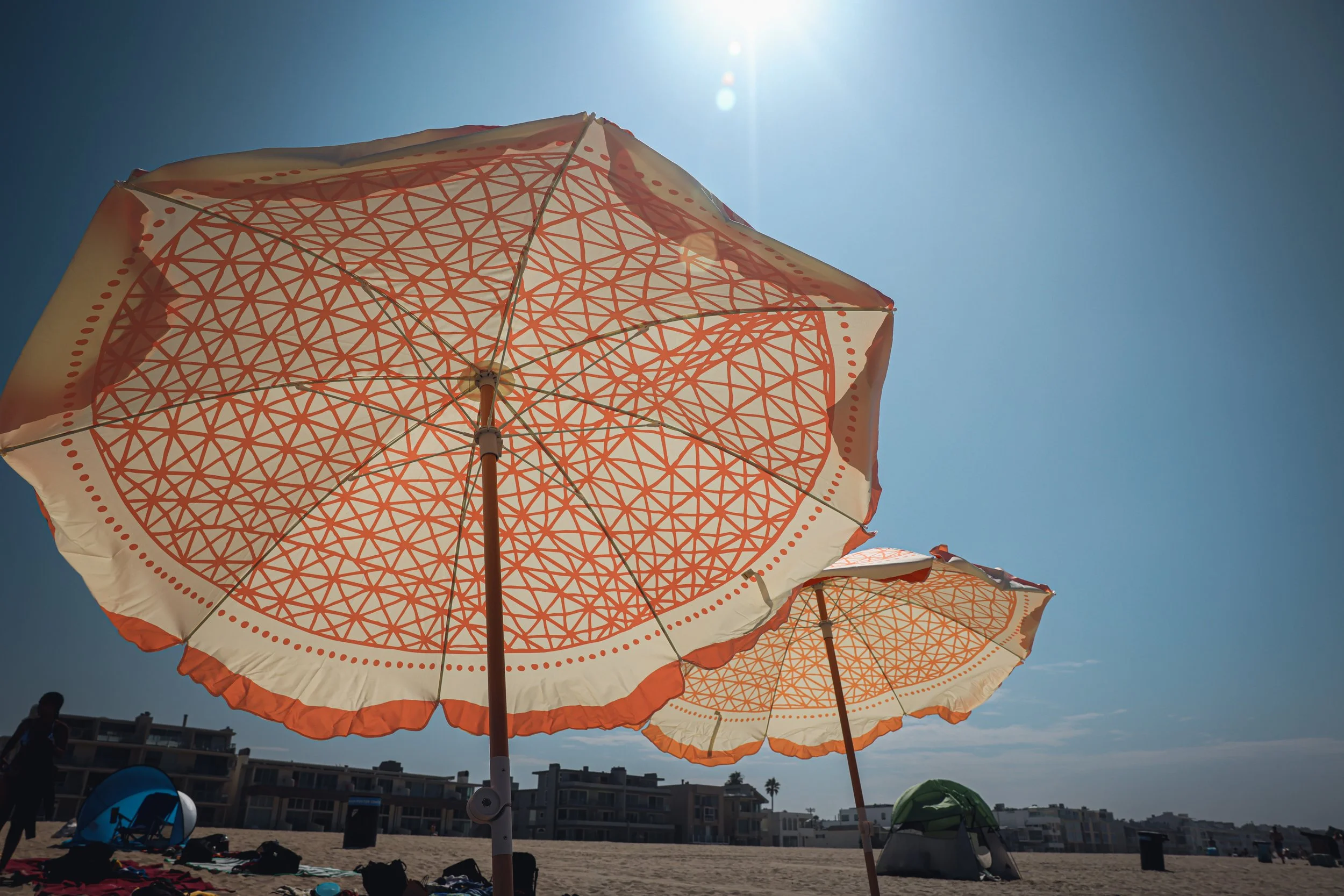
Once you’ve chosen a beach umbrella with UV-blocking fabric and rich, sun-washed hues, your next job is to help it do its job for seasons to come. Proper care is not just a matter of keeping your umbrella looking sharp; it helps preserve the very protection you bought it for.
Think of it like the favorite jacket you’d never leave crumpled in the rain. Your umbrella deserves the same attention, especially after long, salty days under the sun.
Here’s how to make that protection last:
Always air dry completely. Folding your beach umbrella while damp invites mildew and weakens the fabric over time. Let it breathe before storing.
Brush off sand and salt. Use a soft-bristled brush; harsh scrubbing can wear down UV coatings and damage fabric fibers.
Store it smart. Keep it upright in a dry, climate-controlled area to prevent rust, frame warping, and UV degradation from prolonged heat or humidity.
Inspect regularly. Before each outing, check for fading, loose stitching, or weakened joints. Small issues can grow fast with repeated exposure.
Secure it well. A strong base and tight fasteners keep your umbrella stable, and stable shade is safer shade.
Caring for your umbrella isn’t about fuss—it’s a routine that pays off in peace of mind. A well-tended beach umbrella keeps giving you the protection and beauty you chose it for, year after year.
What to Look for in a UV-Safe Beach Umbrella
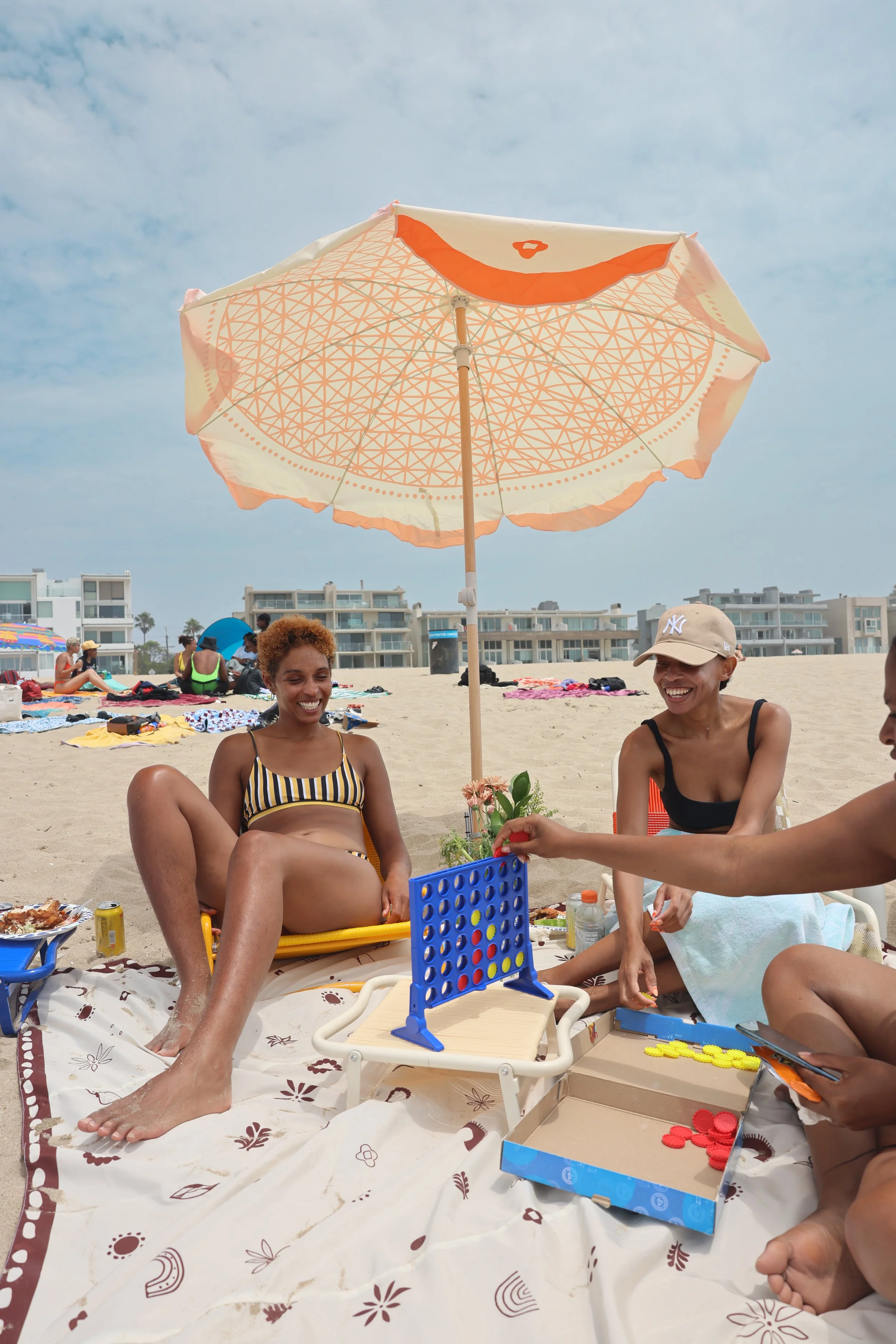
With UPF 50+ explained, how do you actually choose the right beach umbrella for maximum UV protection and safety?
Not all beach umbrellas are created equal, especially when it comes to sun protection. If you’re shopping with UV safety in mind, here are the features that matter most:
Look for UPF 50+ fabric. This rating blocks 98% of UV rays, even when the fabric is damp or stretched. It’s the gold standard for serious sun defense.
Go for wide coverage. A generously sized canopy (ideally 6 feet or more in diameter) offers better protection from both direct sunlight and reflected UV off sand and water.
Choose a stable frame. Reinforced ribs, vented canopies, and deep anchor systems will keep the umbrella steady in coastal winds, because an umbrella that won’t stay put can’t protect you.
Prioritize smart materials. Some UV umbrellas feature cooling fabrics that reflect heat, keeping the space beneath them up to 15 degrees cooler.
Portability matters. Lightweight frames and compact folding options make it easy to bring your umbrella wherever the sun finds you.
Don't forget style. Sun safety doesn’t have to mean sacrificing beauty—textile-inspired designs and timeless color palettes let you stay protected and polished.
From structure to fabric to finish, the right umbrella is one that works hard in the background, so you can relax beneath it. ITA’s collection is made with all of this in mind, blending aesthetic elegance with practical protection.
Shade That Speaks to Style and Safety
The sun may set the scene, but your umbrella sets the tone. Whether you're planning tropical escapes or spontaneous seaside afternoons, sun safety doesn’t have to come at the cost of beauty. At ITA Leisure, our umbrellas are designed to do more than cast a shadow—they reflect thoughtful craftsmanship, vibrant heritage, and everyday practicality.
Explore our shop to find a sun-safe companion that blends timeless design with modern protection. After all, great shade should feel as good as it looks.